|
8 ways to build legs when you're banged up





DOS (Denial Of Service) Attack Tutorial Ping Of Death ;DDOS
What is DoS Attack?
DOS is an attack used to deny legitimate users access to a resource such as accessing a website, network, emails, etc. or making it extremely slow. DoS is the acronym for Denial of Service. This type of attack is usually implemented by hitting the target resource such as a web server with too many requests at the same time. This results in the server failing to respond to all the requests. The effect of this can either be crashing the servers or slowing them down.

Cutting off some business from the internet can lead to significant loss of business or money. The internet and computer networks power a lot of businesses. Some organizations such as payment gateways, e-commerce sites entirely depend on the internet to do business.
In this tutorial, we will introduce you to what denial of service attack is, how it is performed and how you can protect against such attacks.
Topics covered in this tutorial
- Types of Dos Attacks
- How DoS attacks work
- DoS attack tools
- DoS Protection: Prevent an attack
- Hacking Activity: Ping of Death
- Hacking Activity: Launch a DOS attack
Types of Dos Attacks
There are two types of Dos attacks namely;
- DoS– this type of attack is performed by a single host
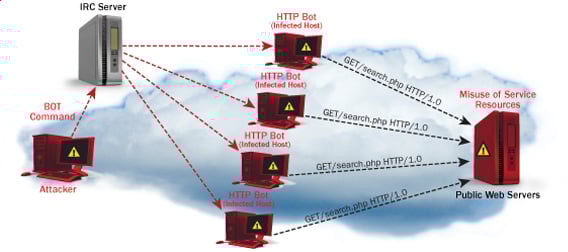
- Distributed DoS– this type of attack is performed by a number of compromised machines that all target the same victim. It floods the network with data packets.
How DoS attacks work
Let's look at how DoS attacks are performed and the techniques used. We will look at five common types of attacks.
Ping of Death
The ping command is usually used to test the availability of a network resource. It works by sending small data packets to the network resource. The ping of death takes advantage of this and sends data packets above the maximum limit (65,536 bytes) that TCP/IP allows. TCP/IP fragmentation breaks the packets into small chunks that are sent to the server. Since the sent data packages are larger than what the server can handle, the server can freeze, reboot, or crash.
Smurf
This type of attack uses large amounts of Internet Control Message Protocol (ICMP) ping traffic target at an Internet Broadcast Address. The reply IP address is spoofed to that of the intended victim. All the replies are sent to the victim instead of the IP used for the pings. Since a single Internet Broadcast Address can support a maximum of 255 hosts, a smurf attack amplifies a single ping 255 times. The effect of this is slowing down the network to a point where it is impossible to use it.
Buffer overflow
A buffer is a temporal storage location in RAM that is used to hold data so that the CPU can manipulate it before writing it back to the disc. Buffers have a size limit. This type of attack loads the buffer with more data that it can hold. This causes the buffer to overflow and corrupt the data it holds. An example of a buffer overflow is sending emails with file names that have 256 characters.
Teardrop
This type of attack uses larger data packets. TCP/IP breaks them into fragments that are assembled on the receiving host. The attacker manipulates the packets as they are sent so that they overlap each other. This can cause the intended victim to crash as it tries to re-assemble the packets.
SYN attack
SYN is a short form for Synchronize. This type of attack takes advantage of the three-way handshake to establish communication using TCP. SYN attack works by flooding the victim with incomplete SYN messages. This causes the victim machine to allocate memory resources that are never used and deny access to legitimate users.
DoS attack tools
The following are some of the tools that can be used to perform DoS attacks.
- Nemesy– this tool can be used to generate random packets. It works on windows. This tool can be downloaded from http://packetstormsecurity.com/files/25599/nemesy13.zip.html . Due to the nature of the program, if you have an antivirus, it will most likely be detected as a virus.
- Land and LaTierra– this tool can be used for IP spoofing and opening TCP connections
- Blast– this tool can be downloaded from http://www.opencomm.co.uk/products/blast/features.php
- Panther- this tool can be used to flood a victim's network with UDP packets.
- Botnets– these are multitudes of compromised computers on the Internet that can be used to perform a distributed denial of service attack.
DoS Protection: Prevent an attack
An organization can adopt the following policy to protect itself against Denial of Service attacks.
- Attacks such as SYN flooding take advantage of bugs in the operating system. Installing security patches can help reduce the chances of such attacks.
- Intrusion detection systems can also be used to identify and even stop illegal activities
- Firewalls can be used to stop simple DoS attacks by blocking all traffic coming from an attacker by identifying his IP.
- Routers can be configured via the Access Control List to limit access to the network and drop suspected illegal traffic.
Hacking Activity: Ping of Death
We will assume you are using Windows for this exercise. We will also assume that you have at least two computers that are on the same network. DOS attacks are illegal on networks that you are not authorized to do so. This is why you will need to setup your own network for this exercise.
Open the command prompt on the target computer
Enter the command ipconfig. You will get results similar to the ones shown below

For this example, we are using Mobile Broadband connection details. Take note of the IP address. Note: for this example to be more effective, and you must use a LAN network.
Switch to the computer that you want to use for the attack and open the command prompt
We will ping our victim computer with infinite data packets of 65500
Enter the following command
ping 10.128.131.108 –t |65500
HERE,
- "ping" sends the data packets to the victim
- "10.128.131.108" is the IP address of the victim
- "-t" means the data packets should be sent until the program is stopped
- "-l" specifies the data load to be sent to the victim
You will get results similar to the ones shown below

Flooding the target computer with data packets doesn't have much effect on the victim. In order for the attack to be more effective, you should attack the target computer with pings from more than one computer.
The above attack can be used to attacker routers, web servers etc.
If you want to see the effects of the attack on the target computer, you can open the task manager and view the network activities.
- Right click on the taskbar
- Select start task manager
- Click on the network tab
- You will get results similar to the following

If the attack is successful, you should be able to see increased network activities.
Hacking Activity: Launch a DOS attack
In this practical scenario, we are going to use Nemesy to generate data packets and flood the target computer, router or server.
As stated above, Nemesy will be detected as an illegal program by your anti-virus. You will have to disable the anti-virus for this exercise.
- Download Nemesy from http://packetstormsecurity.com/files/25599/nemesy13.zip.html
- Unzip it and run the program Nemesy.exe
- You will get the following interface
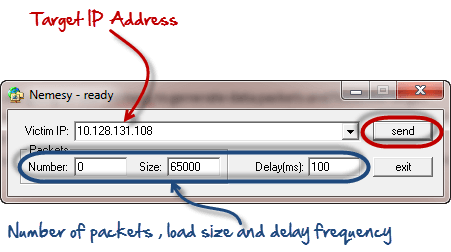
Enter the target IP address, in this example; we have used the target IP we used in the above example.
HERE,
- 0 as the number of packets means infinity. You can set it to the desired number if you do not want to send, infinity data packets
- The size field specifies the data bytes to be sent and the delay specifies the time interval in milliseconds.
Click on send button
You should be able to see the following results

The title bar will show you the number of packets sent
Click on halt button to stop the program from sending data packets.
You can monitor the task manager of the target computer to see the network activities.
Summary
- A denial of service attack's intent is to deny legitimate users access to a resource such as a network, server etc.
- There are two types of attacks, denial of service and distributed denial of service.
- A denial of service attack can be carried out using SYN Flooding, Ping of Death, Teardrop, Smurf or buffer overflow
- Security patches for operating systems, router configuration, firewalls and intrusion detection systems can be used to protect against denial of service attacks.
@EVERYTHING NT
Read more
Theharvester: Email Harvesting Throughout Year

You might have harvested many things upto now but what we are going to harvest today is something bad :)
Requirements:
- A Linux box (I'm using Kali Linux)
- theharvester program (already available in Kali Linux)
OK stop talking and start doing.
Fire up a terminal in your kali box and type this command:
theharvester -d hotmail.com -l 50 -b google
In a small amount of time you'll see your terminal flooded with 200 hotmail.com email address. What does this command mean?

theharvester is the tool name that we are using
-d <domain_name> specifies the domain (or website) who's email addresses we're looking for, in our case it was hotmail.com
-l <number> specifies the number of results that we want in the output, I limited it to 50
-b <source> specifies the source on which to look for email addresses, I specified google as the source
Besides google we can specify any of the follow as source:
google, googleCSE, bing, bingapi, pgp, linkedin, google-profiles, people123, jigsaw, twitter, googleplus, all
Here the last entry all means look in every available source.
Let's say you wanted to look in every available source they you should specify the following command:
theharvester -d hotmail.com -b all

-f is another great flag which can be utilized to save the output in case we want to SPAM them later (just kidding) or for other reasons (I'm thinking positive). -f flag saves the result in html or xml format. Let's do just that:
theharvester -d gmail.com -l 50 -b google -f emailaddresses.html
here -f flag is followed by the location where we want to store the file and the name of file, in our case we stored it in our pwd (present working directory) with the name emailaddresses.html.

Above picture shows an html output generated by harvester.
That's it for this tutorial hope to see you next time!
Best Hacking Tools
MOST USEFUL HACKING TOOL
1-Nmap-Network Mapper is popular and free open source hacker's tool.It is mainly used for discovery and security auditing.It is used for network inventory,inspect open ports manage service upgrade, as well as to inspect host or service uptime.Its advantages is that the admin user can monitor whether the network and associated nodes require patching.
2-Haschat-It is the self-proclaimed world's fastest password recovery tool. It is designed to break even the most complex password. It is now released as free software for Linux, OS X, and windows.
3-Metasploit-It is an extremely famous hacking framework or pentesting. It is the collection of hacking tools used to execute different tasks. It is a computer severity framework which gives the necessary information about security vulnerabilities. It is widely used by cyber security experts and ethical hackers also.
4-Acutenix Web Vulnerability Scanner- It crawls your website and monitor your web application and detect dangerous SQL injections.This is used for protecting your business from hackers.
5-Aircrack-ng - This tool is categorized among WiFi hacking tool. It is recommended for beginners who are new to Wireless Specefic Program. This tool is very effective when used rightly.
6-Wireshark-It is a network analyzer which permit the the tester to captyre packets transffering through the network and to monitor it. If you would like to become a penetration tester or cyber security expert it is necessary to learn how to use wireshark. It examine networks and teoubleshoot for obstacle and intrusion.
7-Putty-Is it very beneficial tool for a hacker but it is not a hacking tool. It serves as a client for Ssh and Telnet, which can help to connect computer remotely. It is also used to carry SSH tunneling to byepass firewalls. So, this is also one of the best hacking tools for hackers.
8-THC Hydra- It is one of the best password cracker tools and it consist of operative and highly experienced development team. It is the fast and stable Network Login Hacking Tools that will use dictonary or bruteforce attack to try various combination of passwords against in a login page.This Tool is also very useful for facebook hacking , instagram hacking and other social media platform as well as computer folder password hacking.
9-Nessus-It is a proprietary vulnerability scanner developed by tennable Network Security. Nessus is the world's most popular vulnerability scanner according to the surveys taking first place in 2000,2003,2006 in security tools survey.
10-Ettercap- It is a network sniffing tool. Network sniffing is a computer tool that monitors,analyse and defend malicious attacks with packet sniffing enterprise can keep track of network flow.
11-John the Ripper-It is a free famous password cracking pen testing tool that is used to execute dictionary attacks. It is initially developed for Unix OS. The Ripper has been awarded for having a good name.This tools can also be used to carry out different modifications to dictionary attacks.
12-Burp Suite- It is a network vulnerability scanner,with some advance features.It is important tool if you are working on cyber security.
13-Owasp Zed Attack Proxy Project-ZAP and is abbreviated as Zed Attack Proxy is among popular OWASP project.It is use to find vulnerabilities in Web Applications.This hacking and penetesting tool is very easy to use as well as very efficient.OWASP community is superb resource for those people that work with Cyber Security.
14-Cain & Abel-It is a password recovery tool for Microsoft Operating System. It allow easy recovery of various kinds of passwords by sniffing the networks using dictonary attacks.
15-Maltego- It is a platform that was designed to deliver an overall cyber threat pictures to the enterprise or local environment in which an organisation operates. It is used for open source intelligence and forensics developed by Paterva.It is an interactive data mining tool.
These are the Best Hacking Tools and Application Which are very useful for penetration testing to gain unauthorized access for steal crucial data, wi-fi hacking , Website hacking ,Vulnerability Scanning and finding loopholes,Computer hacking, Malware Scanning etc.
This post is only for educational purpose to know about top hacking tools which are very crucial for a hacker to gain unauthorized access. We are not responsible for any type of crime.


Related news

Social Engineering Pentest Professional(SEPP) Training Review
Intro:
I recently returned from the new Social Engineering training provided by Social-Engineer.org in the beautiful city of Seattle,WA, a state known for sparkly vampires, music and coffee shop culture. As many of you reading this article, i also read the authors definitive book Social Engineering- The art of human hacking and routinely perform SE engagements for my clients. When i heard that the author of the aforementioned book was providing training i immediately signed up to get an in person glance at the content provided in the book. However, i was pleasantly surprised to find the course covered so much more then what was presented in the book.
Instructors:
I wasn't aware that there would be more then one instructor and was extremely happy with the content provided by both instructors. Chris and Robin both have a vast amount of knowledge and experience in the realm of social engineering. Each instructor brought a different angle and use case scenario to the course content. Robin is an FBI agent in charge of behavioral analysis and uses social engineering in his daily life and work to get the results needed to keep our country safe. Chris uses social engineering in his daily work to help keep his clients secure and provides all sorts of free learning material to the information security community through podcasts and online frameworks.
Course Material and Expectation:
I originally thought that the material covered in class would be a live reiteration of the material covered in Chris's book. However, I couldn't have been more wrong !! The whole first day was about reading yourself and other people, much of the material was what Robin uses to train FBI agents in eliciting information from possible terrorist threats. Each learning module was based on live demo's, nightly labs, and constant classroom interaction. Each module was in depth and the level of interaction between students was extremely useful and friendly. I would say the instructors had as much fun as the students learning and sharing social techniques and war stories.
The class was heavily made up of ways to elicit personal and confidential information in a way that left the individuatial "Happier for having met you". Using language, body posture and social truisms as your weapon to gather information, not intended for your ears, but happily leaving the tongue of your target.
Other class activities and materials included an in depth look at micro expressions with labs and free extended learning material going beyond the allotted classroom days. Also break out sessions which focused on creating Phone and Phishing scripts to effectively raise your rate of success. These sessions were invaluable at learning to use proper language techniques on the phone and in email to obtain your objectives.
Nightly Missions/Labs:
If you think that you are going to relax at night with a beer. Think again!! You must ensure that your nights are free, as you will be going on missions to gain information from live targets at venues of your choice. Each night you will have a partner and a mission to gain certain information while making that persons day better then it started. The information you are requested to obtain will change each night and if done properly you will notice all of the material in class starting to unfold.. When you get to body language training you will notice which targets are open and when its best to go in for the kill. You will see interactions change based on a persons change in posture and facial expressions. Each day you will take the new techniques you have learned and put them into practice. Each morning you have to report your findings to the class..
During my nightly labs i obtained information such as door codes to secured research facilities, information regarding secret yet to be released projects. On the lighter side of things i obtained much personal information from my targets along with phone numbers and invitations for further hangouts and events. I made many new friends inside and outside of class.
There were also labs within the confines of the classroom such as games used to solidify your knowledge and tests to figure out what kind of learner you are. Technical labs on the use of information gathering tools and ways to use phone and phishing techniques to your advantage via linguistically and technologically. Essentially the class was about 60% interaction and labs.
Proof it works:
After class i immediately had a phishing and phone based contract at my current employment. I used the email and phone scripts that we created in class with 100% click rate and 100% success in phone elicitation techniques. Gaining full unfettered access to networks through phone and email elicitation and interaction. Although I do generally have a decent SE success rate, my rates on return are now much higher and an understanding of what works and what doesn't, and why are much more refined.
Conclusion and Certification:
I paid for this class out of pocket, including all expenses, hotels, rentals cars and planes etc etc. I would say that the class was worth every penny in which i paid for it. Many extras were given including black hat passes, extended training from notable sources and continued interaction from instructors after class ended. I would highly recommend this class to anyone looking for a solid foundation in social engineering or a non technical alternative to training. You will learn a lot, push yourself in new ways and have a blast doing it. However I did not see any sparkly vampires while in seattle.... Twilight lied to me LOL
The certification is a 48 hour test in which you will utilize your knowledge gained technologically and socially to breach a company.I am not going to give away to much information about the certification as i haven't taken it yet and I do not want to misspeak on the subject. However I will say that social-engineer.org has done an excellent job at figuring out a way to include Real World Social Engineering into a test with verifiable proof of results. I am going to take my test in a couple weeks and it should be a blast!!!
Thanks and I hope this review is helpful to all those looking for SE training. I had a blast :) :)Related word
I recently returned from the new Social Engineering training provided by Social-Engineer.org in the beautiful city of Seattle,WA, a state known for sparkly vampires, music and coffee shop culture. As many of you reading this article, i also read the authors definitive book Social Engineering- The art of human hacking and routinely perform SE engagements for my clients. When i heard that the author of the aforementioned book was providing training i immediately signed up to get an in person glance at the content provided in the book. However, i was pleasantly surprised to find the course covered so much more then what was presented in the book.
Instructors:
- Chris Hadnagy the author of the book Social Engineering- The art of human hacking.
- Robin Dreeke the author of the book It's not all about me.
I wasn't aware that there would be more then one instructor and was extremely happy with the content provided by both instructors. Chris and Robin both have a vast amount of knowledge and experience in the realm of social engineering. Each instructor brought a different angle and use case scenario to the course content. Robin is an FBI agent in charge of behavioral analysis and uses social engineering in his daily life and work to get the results needed to keep our country safe. Chris uses social engineering in his daily work to help keep his clients secure and provides all sorts of free learning material to the information security community through podcasts and online frameworks.
Course Material and Expectation:
I originally thought that the material covered in class would be a live reiteration of the material covered in Chris's book. However, I couldn't have been more wrong !! The whole first day was about reading yourself and other people, much of the material was what Robin uses to train FBI agents in eliciting information from possible terrorist threats. Each learning module was based on live demo's, nightly labs, and constant classroom interaction. Each module was in depth and the level of interaction between students was extremely useful and friendly. I would say the instructors had as much fun as the students learning and sharing social techniques and war stories.
The class was heavily made up of ways to elicit personal and confidential information in a way that left the individuatial "Happier for having met you". Using language, body posture and social truisms as your weapon to gather information, not intended for your ears, but happily leaving the tongue of your target.
Other class activities and materials included an in depth look at micro expressions with labs and free extended learning material going beyond the allotted classroom days. Also break out sessions which focused on creating Phone and Phishing scripts to effectively raise your rate of success. These sessions were invaluable at learning to use proper language techniques on the phone and in email to obtain your objectives.
Nightly Missions/Labs:
If you think that you are going to relax at night with a beer. Think again!! You must ensure that your nights are free, as you will be going on missions to gain information from live targets at venues of your choice. Each night you will have a partner and a mission to gain certain information while making that persons day better then it started. The information you are requested to obtain will change each night and if done properly you will notice all of the material in class starting to unfold.. When you get to body language training you will notice which targets are open and when its best to go in for the kill. You will see interactions change based on a persons change in posture and facial expressions. Each day you will take the new techniques you have learned and put them into practice. Each morning you have to report your findings to the class..
During my nightly labs i obtained information such as door codes to secured research facilities, information regarding secret yet to be released projects. On the lighter side of things i obtained much personal information from my targets along with phone numbers and invitations for further hangouts and events. I made many new friends inside and outside of class.
There were also labs within the confines of the classroom such as games used to solidify your knowledge and tests to figure out what kind of learner you are. Technical labs on the use of information gathering tools and ways to use phone and phishing techniques to your advantage via linguistically and technologically. Essentially the class was about 60% interaction and labs.
Proof it works:
After class i immediately had a phishing and phone based contract at my current employment. I used the email and phone scripts that we created in class with 100% click rate and 100% success in phone elicitation techniques. Gaining full unfettered access to networks through phone and email elicitation and interaction. Although I do generally have a decent SE success rate, my rates on return are now much higher and an understanding of what works and what doesn't, and why are much more refined.
Conclusion and Certification:
I paid for this class out of pocket, including all expenses, hotels, rentals cars and planes etc etc. I would say that the class was worth every penny in which i paid for it. Many extras were given including black hat passes, extended training from notable sources and continued interaction from instructors after class ended. I would highly recommend this class to anyone looking for a solid foundation in social engineering or a non technical alternative to training. You will learn a lot, push yourself in new ways and have a blast doing it. However I did not see any sparkly vampires while in seattle.... Twilight lied to me LOL
The certification is a 48 hour test in which you will utilize your knowledge gained technologically and socially to breach a company.I am not going to give away to much information about the certification as i haven't taken it yet and I do not want to misspeak on the subject. However I will say that social-engineer.org has done an excellent job at figuring out a way to include Real World Social Engineering into a test with verifiable proof of results. I am going to take my test in a couple weeks and it should be a blast!!!
Thanks and I hope this review is helpful to all those looking for SE training. I had a blast :) :)Related word
Enumy - Linux Post Exploitation Privilege Escalation Enumeration

Enumy is portable executable that you drop on target Linux machine during a pentest or CTF in the post exploitation phase. Running enumy will enumerate the box for common security vulnerabilities. Enumy has a Htop like Ncurses interface or a standard interface for dumb reverse shells.
Installation
You can download the final binary from the release x86 or x64 tab. Statically linked to musl Transfer the final enumy binary to the target machine
./enumyWho Should Use Enumy?
- Pentester can run on a target machine raisable issues for their reports.
- CTF players can use it identify things that they might have missed.
- People who are curious to know how many isues enumy finds on their local machine?
Options
$ ./enumy64 -h

 ▄█▀─▄▄▄▄▄▄▄─▀█▄  _____
 ▀█████████████▀ |   __|___ _ _ _____ _ _
     █▄███▄█     |   __|   | | |     | | |
      █████      |_____|_|_|___|_|_|_|_  |
      █▀█▀█                          |___|

------------------------------------------

Enumy - Used to enumerate the target environment and look for common
security vulnerabilities and hostspots

 -o <loc>     Save results to location
 -i <loc>     Ignore files in this directory (usefull for network shares)
 -w <loc>     Only walk files in thi   s directory (usefull for devlopment)
 -t <num>     Threads (default 4)
 -f           Run full scans
 -d           Display debugging information
 -n           Enabled ncurses
 -h           Show help
Compilation
To compile during devlopment, make libcap and the ncurses libary is all that is required.
make./build.sh 64bit ./build.sh 32bit ./build.sh all cd output Scans That've Been Implemented
Below is the ever growing list of scans that have been implemented.
Quck Scan
- SUID/GUID scans
- File capabilities
- Interesting files scan
- Coredump scan
- Breakout binary scan
Full Scan
- Quick Scan
- Binary analysis
Scan Times
Changing the default number of threads is pretty pointless unless you're running a full scan. A full scan will do a lot more IO so more threads greatly decrease scan times. These are the scan times with a i7-8700k and 2 million files scanned.
Quick Scan Times
- 2 Thread ->
system 70% cpu 54.093 total - 2 Thread ->
system 121% cpu 26.122 total - 4 Thread ->
system 289% cpu 15.657 total - 8 Threads ->
system 468% cpu 15.863 total - 12 Thread ->
system 420% cpu 20.548 total
Full Scan Times
- 1 Thread ->
system 50% cpu 3:16.38 total - 2 Thread ->
system 86% cpu 1:33.95 total - 4 Thread ->
system 165% cpu 47.753 total - 8 Threads ->
system 366% cpu 29.768 total - 12 Thread ->
system 467% cpu 29.815 total
How To Contribute
- If you can think of a scan idea that has not been implemented, raise it as an issue.
- Make a pull request, make sure that.
- Each scan is given a unique ID
- Multiple related scans are in the same file.
- No more than one scan/test per function.
via KitPloitMore info
- Pentest Vs Ceh
- Pentestmonkey
- Hackerrank
- Pentest Dns
- Pentest Dns
- Hacking Site
- Pentest Security
- Pentest Smtp
- Basic Pentest 1 Walkthrough
- Hacking Hardware
- Pentest Cyber Security
- Pentest Kit
- Pentest Tools For Windows
- Hackerx
- Pentest Security
- Pentest Windows
- Hacking Meaning
- Hacking Tutorials
- Pentest Tools Free
- Pentest Devices
Subscribe to:
Posts (Atom)